October 20 2026

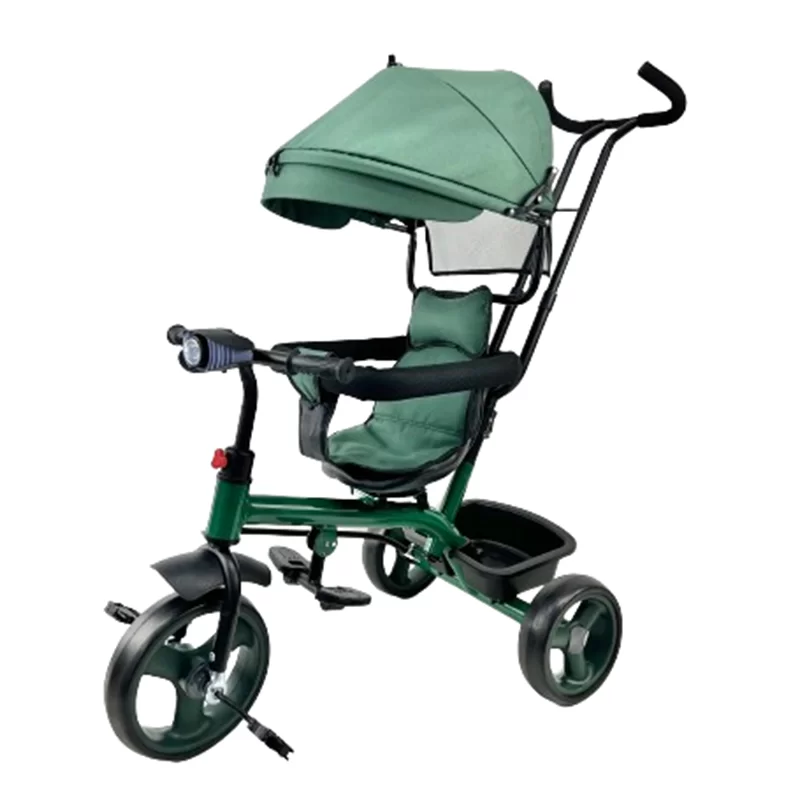
Procurement evaluation for the 3-in-1 children ride-on toy requires a systematic assessment of lifecycle durability, maintenance predictability, and regulatory alignment. Sourcing managers must examine structural integrity based on verified material parameters rather than unverified test assumptions.
Lifecycle outcomes depend heavily on the baseline combination of high-carbon steel and industrial-grade EVA tires. Compliance verification relies strictly on documentation available from the supplier.
Commercial deployment within wholesale channels requires a structured evaluation of baseline component integrity. High-carbon steel frames combined with industrial-grade EVA tires deliver the primary mechanical strength necessary to withstand dynamic operational loads.
Impact resistance across secondary body sections relies heavily on non-toxic plastics obtained from approved production sources. These primary elements jointly determine how well the vehicle resists premature deformation during daily pediatric utilization.
Procurement teams must review verified material parameters before finalizing wholesale purchase agreements. The structured overview below details the core physical attributes associated with the manufactured assembly.
| Component Category | Material Specification | Commercial Sourcing Parameter |
|---|---|---|
| Main Frame | High-Carbon Steel Frame | Low MOQ |
| Wheel Assembly | Industrial-Grade EVA Tires | Low MOQ |
| Body Panels | Non-Toxic Plastics | Low MOQ |
Surface vulnerability under prolonged outdoor exposure demands specific verification from the manufacturing partner before distribution begins. Contact the supplier to obtain salt-spray exposure data and corrosion resistance test reports.
Operating without documented environmental performance metrics increases the risk of accelerated surface oxidation in humid or coastal destination markets. Supply chain managers must secure these verification documents ahead of bulk dispatch.
Mechanical degradation during daily operation concentrates heavily on specific high-friction zones that experience constant dynamic loading. Moving joints and wheel tread surfaces suffer the most severe mechanical fatigue under standard playground conditions, requiring systematic inspection by wholesale importers. Consumable wear patterns vary noticeably across diverse outdoor terrains, making surface hardness and structural resilience critical purchasing metrics.
Surface degradation rates accelerate when units operate on abrasive concrete compared to smooth indoor flooring. Fleet operators tracking fleet depreciation must evaluate wheel resilience against gravel and asphalt paths. When purchasing agents assess batch longevity, specific replacement thresholds for pedals, steering pivots, and axle connections depend heavily on expected usage intensity and freight destination climates.
Monitoring dynamic friction points prevents sudden functional failure during peak rental seasons. Regular assessment schedules help wholesale distributors mitigate consumer return risks effectively.
Steering pivots and pedal assemblies require scheduled lubricant application to minimize premature metal-on-metal abrasion. Wheel tread thickness diminishes progressively depending on daily mileage and rider weight distributions. Procurement teams must integrate these maintenance realities into local service level agreements.
Replacement part availability remains a decisive factor for maintaining long-term brand equity across retail channels. Sourcing managers evaluate spare part inventories based on projected failure frequencies and regional logistics lead times.
Integrated lights and music modules face severe vulnerability to moisture ingress during outdoor play, which directly threatens functional reliability. When dew, rain, or puddle splashes penetrate unsealed housings, internal circuits experience short-circuiting and rapid terminal oxidation.
Frequent power interruptions usually stem from loose spring contacts inside the power housing rather than dead cells. Technicians can resolve intermittent shutdowns by gently bending battery contacts back into proper alignment to restore continuous electrical conductivity.

Commercial distribution frameworks require verifiable alignment with designated toy safety directives across target import jurisdictions. CE certification is available for this product, establishing baseline market access requirements. Importers must review regulatory documentation prior to scheduling ocean freight to prevent customs clearance delays at destination ports.
The regulatory structure integrates multiple safety standards designed for juvenile ride-on equipment. Verification protocols rely on requested declarations for EN71 and ASTM compliance frameworks. Wholesale buyers should inspect these records against local jurisdiction mandates before committing working capital to volume purchase orders.
| Certification Framework | Available Documentation Type | Application Scope |
|---|---|---|
| CE | Test Reports and Declarations | General Market Access |
| EN71 | Safety and Mechanical Test Data | Pediatric Ride-On Safety |
| ASTM | Material and Physical Compliance | North American Distribution |
Quality assurance leads examine testing parameters against low MOQ parameters to ensure batch consistency across shipments. Procurement contracts should explicitly condition final balance payments upon successful verification of all listed compliance files.
Proactive after-sales care frameworks require brands to provide clear assembly guides and troubleshooting documentation for common wear issues on pedals and steering pivots. Addressing minor complaints regarding surface scuffs or fastener adjustments swiftly prevents escalation into formal product returns. Clear guidelines on handling non-toxic plastic panels ensure customers receive immediate clarity on material safety and maintenance without unnecessary processing delays.
Wholesale agreements must define precise warranty periods and supplier accountability metrics for defective mechanical or electrical parts, depending on the agreed purchase volume and destination market requirements. Clear liability divisions ensure that replacement components for moving joints or integrated musical modules are funded by the responsible party during the agreed claims window. Operational workflows for customer service teams should prioritize batch tracking to isolate defective lots instantly.
Synthesizing material composition, mechanical constraints, and regulatory compliance into a unified evaluation framework ensures that purchasing decisions mitigate downstream commercial risks. Sourcing managers examining the pediatric ride-on category must weigh the initial cost advantages of low minimum order quantities against the stringency of incoming quality assurance protocols. Integrating multi-factor inspection metrics allows wholesale importers to filter out substandard shipments before products enter secondary distribution channels.
A rigorous supplier audit checklist must address the core structural parameters established during manufacturing. Procurement teams verify that framing utilizes high-carbon steel and that ground contact relies on industrial-grade EVA tires. Evaluating these physical components alongside non-toxic plastics establishes a baseline for impact resistance and daily structural longevity.
| Evaluation Parameter | Specification Basis | Verification Protocol |
|---|---|---|
| Material Composition | High-Carbon Steel, EVA, Non-Toxic Plastics | Factory inspection and incoming sample testing |
| Commercial Terms | Low MOQ | Batch verification against purchase agreement |
| Regulatory Framework | CE, EN71, ASTM | Documentation review prior to shipping |
Rigorous incoming quality control protocols protect importers from absorbing high defect rates associated with low-tier manufacturing. Sourcing teams enforce strict tolerance checks on framing wall thickness and verify that industrial-grade EVA tires maintain consistent density without surface cracking. Furthermore, electronic housing assemblies undergo strict seal inspections to prevent premature moisture entry during outdoor operational cycles.
Actionable next steps require procurement leads to compile a formal Request for Information addressing unresolved corrosion resistance data and consumable wear limits. Engaging the manufacturing partner directly secures the necessary documentation to validate CE, EN71, and ASTM compliance before final payment terms are executed. Establishing these operational boundaries protects brand reputation and reduces consumer return frequencies across international wholesale networks.

Operational practices require routine physical inspections of battery compartment sealing and terminal oxidation levels. Preventative maintenance protocols focus on keeping electronic housings clean and dry to minimize power interruption risks. Service longevity depends largely on regional humidity levels and the specific weather conditions at the destination port.
Commercial distribution channels require alignment with recognized safety standards including CE, EN71, and ASTM frameworks. Procurement leads must review complete documentation packages to verify compliance before executing large-scale purchase orders. Availability of these documents varies based on the specific batch and manufacturing schedule.
Proactive after-sales care frameworks directly correlate structural material quality with reduced end-user complaints. Clear warranty terms and defined accountability metrics help coordinate replacement part requests efficiently. Managing return logistics effectively depends on the agreed Low MOQ terms and initial quality assurance inspection protocols.
Supplier audits must evaluate the consistent sourcing of high-carbon steel frames and graded EVA tires alongside non-toxic plastics. Incoming inspection protocols should verify that component dimensions and material hardness match agreed specifications. Final evaluation depends on the supplier production capacity and the agreed purchase order scale.
Importers need comprehensive paperwork verifying adherence to CE, EN71, and ASTM requirements to clear customs and ensure retail compliance. Quality assurance leads check these files against regional import mandates before dispatching bulk shipments. Exact documentation requirements depend on the destination country and local regulatory enforcement.
Commercial acquisition teams finalize procurement strategies by structuring formal requests that consolidate technical verification points before purchase order execution. Sourcing leads aggregate specific inquiry items regarding structural metal stability, friction-point durability thresholds, and moisture barrier integrity into a centralized pre-order document.
Execution of large-scale wholesale contracts depends upon establishing clear accountability for baseline safety validation. Importers require complete verification of CE, EN71, and ASTM compliance documentation prior to dispatching initial financial deposits.
Clear division of responsibility between the manufacturing partner and the importing brand minimizes downstream warranty disputes. Detailed technical RFI packets ensure that all operational parameters—ranging from material grade limits to compartment sealing—are fully documented and mutually agreed upon before mass production runs commence.


Hit enter to search or ESC to close