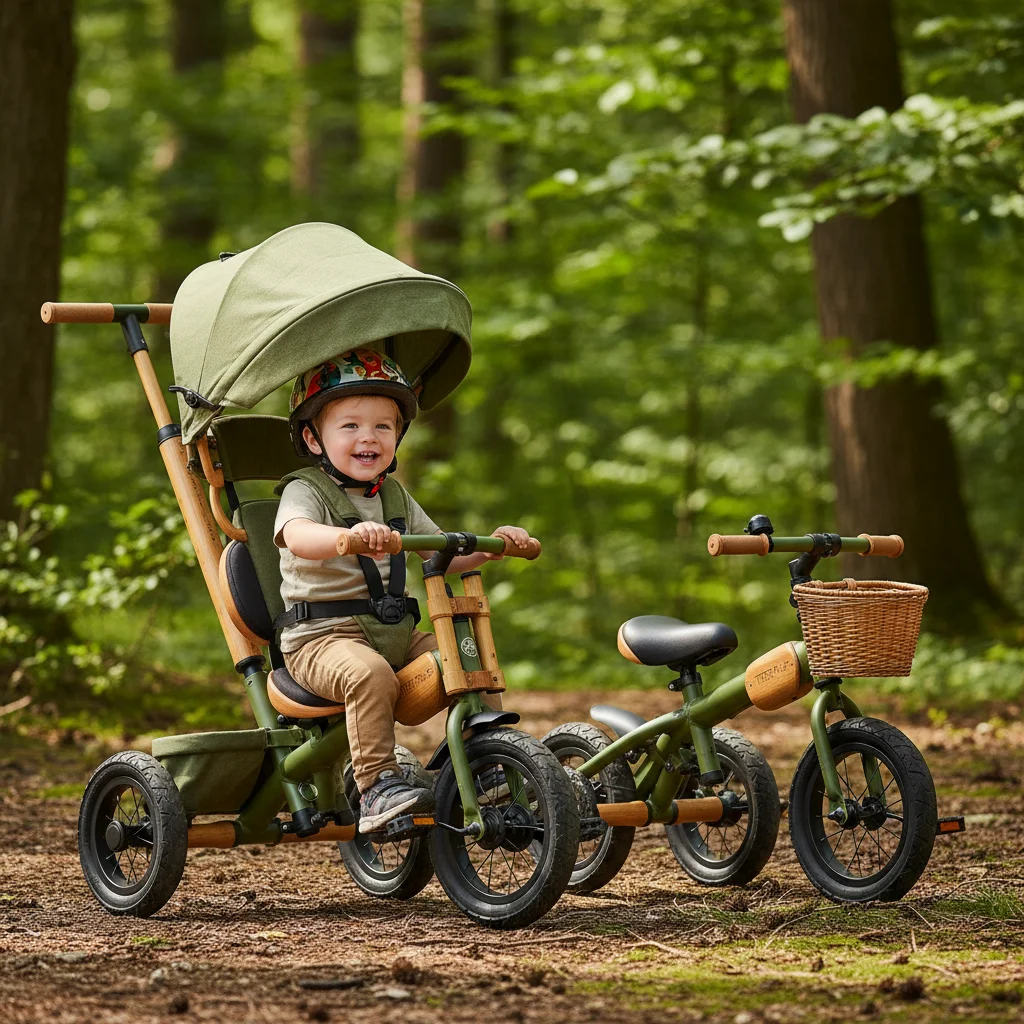
Selecting the right partner for children's ride-ons requires more than just comparing price lists; it necessitates an understanding of the intersection between developmental psychology and manufacturing precision. For businesses looking to enter the toddler mobility market, the challenge lies in balancing sensory engagement with uncompromising safety standards.
The shift toward "active play" has transformed the requirements for outdoor equipment. Modern parents no longer seek simple plastic toys but rather tools that foster motor skill development, balance, and physical coordination through ergonomic design. This evolution has placed immense pressure on the supply chain to innovate beyond generic molds.
Whether you are expanding a retail line or launching a private label, finding a reliable Outdoor toys for kids Supplier involves evaluating a factory's ability to integrate global certifications with rapid prototyping capabilities.


The transition from traditional tricycles to balance bikes marks a fundamental shift in early childhood development. While tricycles provided a basic sense of motion, the balance bike focuses on the core mechanics of equilibrium and steering, effectively removing the "training wheel" phase of childhood cycling.
Today, the industry is moving toward hybrid models. The integration of electric assistance for toddlers, combined with industrial-grade polymers and alloy frames, allows for a safer transition into independent riding while maintaining the structural integrity required for diverse outdoor terrains.
The technical superiority of a ride-on depends on the synergy between its drive type and material composition. For 12-14 inch balance bikes, the use of an electric no-pedal design is specifically engineered to support toddlers who have not yet developed the leg strength for traditional pedaling but possess the curiosity for exploration.
Sensory integration has become a key differentiator in the wholesale market. Advanced LED light integration is not merely aesthetic; it serves as a safety feature for visibility and a cognitive stimulant for the child. When combined with modular designs—such as optional push handles for parental guidance and storage baskets—the product becomes a versatile tool rather than a static toy.
From a manufacturing perspective, the choice between industrial-grade polymers and alloys determines the product's lifecycle and weight. A balanced weight distribution is critical to prevent tipping, ensuring that the child's center of gravity remains stable during sharp turns and sudden stops.
Navigating the international toy market requires a strict adherence to regional safety protocols. A product that succeeds in Southeast Asia may fail in the European or North American markets if it lacks the specific certifications required by law.
True market readiness is defined by full documentation and strict adherence to EN71 (Europe), ASTM (USA), and CE safety standards, ensuring that materials are non-toxic and structural designs are impact-resistant.
For distributors, the risk of non-compliance extends beyond legal fines to brand reputation. Working with a source factory that provides end-to-end quality monitoring—from raw material injection molding to final assembly—minimizes the risk of recalls and ensures a consistent safety profile across all shipped units.
When evaluating the investment return of a partnership, businesses often choose between standard ODM (Original Design Manufacturing) and premium customized solutions. Standard ODM offers lower entry barriers but results in generic designs that face high price competition and market saturation.
In contrast, a premium solution focusing on rapid prototyping and low MOQ (Minimum Order Quantity) flexibility allows brands to test the market with unique SKUs. By integrating exclusive color schemes and upgraded sensory modules, brands can command higher margins and build stronger customer loyalty.
The versatility of modern ride-ons allows them to be deployed across various commercial channels. For maternal-child retail chains, the focus is often on "giftability," where premium packaging and exclusive colors drive impulse purchases. In contrast, kindergartens and early childhood centers prioritize durability and ease of maintenance, favoring high-capacity polymer frames and simple, sturdy tricycle designs.
Cross-border e-commerce platforms face the unique challenge of logistics and customs. A typical manufacturer evaluating a partnership will look for a supplier with established export expertise in over 50 countries, ensuring that documentation for CE and ASTM is flawlessly handled to prevent shipment delays at the border.
The industry is witnessing a convergence of "smart" features and sustainable materials. We are seeing an increase in the demand for eco-friendly, non-toxic polymers that do not compromise on impact resistance. This shift is driven by a global movement toward sustainable parenting and stricter chemical regulations in the EU.
Joint development and patent sharing are becoming the new norm for competitive brands. Rather than relying on off-the-shelf blueprints, forward-thinking companies are collaborating with their factories on R&D pipelines to create unique functional upgrades, such as adjustable seats that grow with the child or integrated educational sound modules.
The move toward "modularization" allows for different product tiers within a single line. By offering a base model and adding optional accessories like protective canopies or storage baskets, brands can capture multiple price points—from budget-conscious first-time buyers to premium luxury seekers.
Choosing a partner in the children's vehicle sector requires a matrix-based approach. The decision should not be based on a single factor but on the alignment of the supplier's capabilities with the brand's growth stage.
A startup brand requires flexibility, rapid sampling, and low MOQs to minimize inventory risk. Conversely, an established global brand requires scaled production, rigorous real-time quality assurance, and a logistics engine capable of international distribution to dozens of countries simultaneously.
The following framework illustrates the trade-offs and priorities when evaluating different manufacturing paths for kids' outdoor toys.
| Evaluation Factor | Standard ODM | Premium Customization | Joint R&D Path |
|---|---|---|---|
| Time-to-Market | Immediate (Stock) | Fast (Sampling) | Medium (Development) |
| Brand Differentiation | Low (Generic) | High (Bespoke) | Extreme (Patented) |
| Initial Capital Risk | Low | Moderate | Higher |
| Compliance Rigor | Basic Certs | Full Documentation | Co-developed Standards |
| Inventory Flexibility | Fixed MOQ | Flexible MOQ | Project-based |
| Product Life Cycle | Short (Trend-based) | Medium (Brand-led) | Long (Innovative) |
The most critical certifications include EN71 for the European market, ASTM for the United States, and CE certification. These standards verify that the product is made from non-toxic materials, possesses no sharp edges or choking hazards, and can withstand specific impact and stress tests to ensure the structural safety of the toddler during use.
Traditional balance bikes rely entirely on the child's physical effort to push off the ground. Electric no-pedal designs integrate a motorized drive system that assists the child's movement. This is particularly useful for very young toddlers or those with developing motor skills, providing a bridge between static toys and active riding while still focusing on balance and steering.
Yes, through OEM/ODM services, you can customize the entire brand identity. This includes professional logo printing, the selection of exclusive color schemes, and the application of custom decals. High-tier suppliers also offer bespoke packaging design to ensure the product's retail presence aligns with your brand's positioning.
A source factory provides direct control over the production line, including injection molding and assembly. This eliminates intermediaries, reducing costs and lead times. More importantly, it allows for real-time quality monitoring and more flexible customization, as the designers and engineers are on-site and can implement changes rapidly during the sampling phase.
Many professional suppliers now offer flexible MOQ options to support new partners in testing the market. This reduces the financial risk for the importer and allows for iterative product refinement based on real customer feedback before moving into full-container load orders.
To create different product tiers, you can integrate accessories such as parental push handles, storage baskets, protective sun canopies, and upgraded sound/light modules. These additions allow a brand to offer a "Basic," "Standard," and "Premium" version of the same core product, expanding the target audience.
The success of a children's ride-on line depends on the seamless integration of safety, sensory engagement, and manufacturing agility. By moving beyond generic designs and embracing customized, compliant solutions, brands can provide genuine developmental value to children while securing a sustainable competitive advantage in the global market.
As the industry trends toward smarter, safer, and more modular designs, the partnership between the brand and the factory evolves from a simple transaction to a collaborative R&D effort. Prioritizing quality assurance and global compliance today is the only way to ensure long-term growth in the demanding world of children's outdoor play.

atat


Hit enter to search or ESC to close