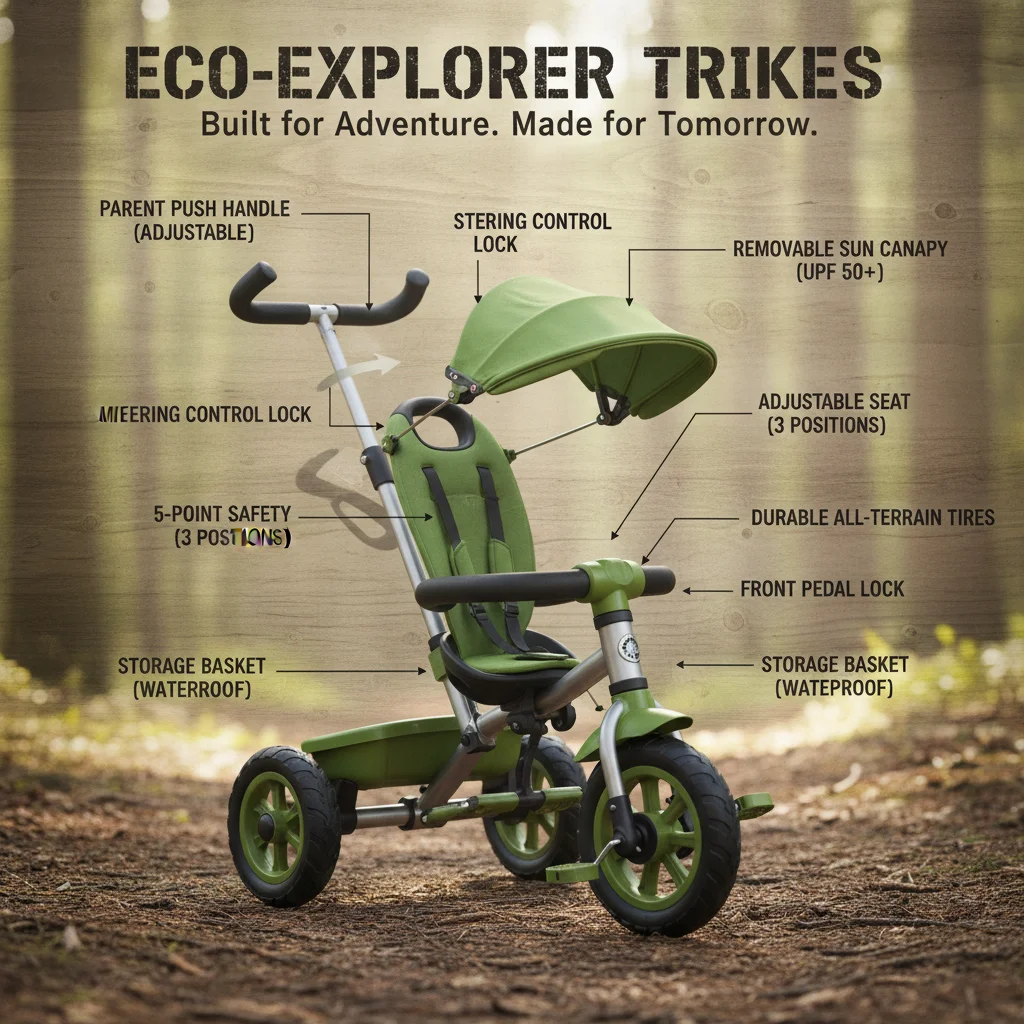
Selecting a reliable push trike with canopy Manufacturer is a critical decision for brands and retailers aiming to enter the competitive early childhood development market. These multi-functional ride-ons serve as a bridge between strollers and independent cycling, providing parents with the control they need while introducing toddlers to the joy of movement. In a global market where safety standards are becoming increasingly stringent, partnering with an expert manufacturer ensures that every component, from the UV-protective canopy to the ergonomic handle, meets international quality benchmarks.
The global demand for high-quality children's ride-ons has surged as modern parents seek products that combine educational value with physical safety. A professional push trike with canopy Manufacturer doesn't just assemble parts; they engineer experiences that promote gross motor skills and sensory exploration. By integrating advanced materials and ergonomic designs, these manufacturers address the primary concerns of the contemporary caregiver: durability, sun protection, and the seamless transition from a guided push-ride to a self-pedaled tricycle.
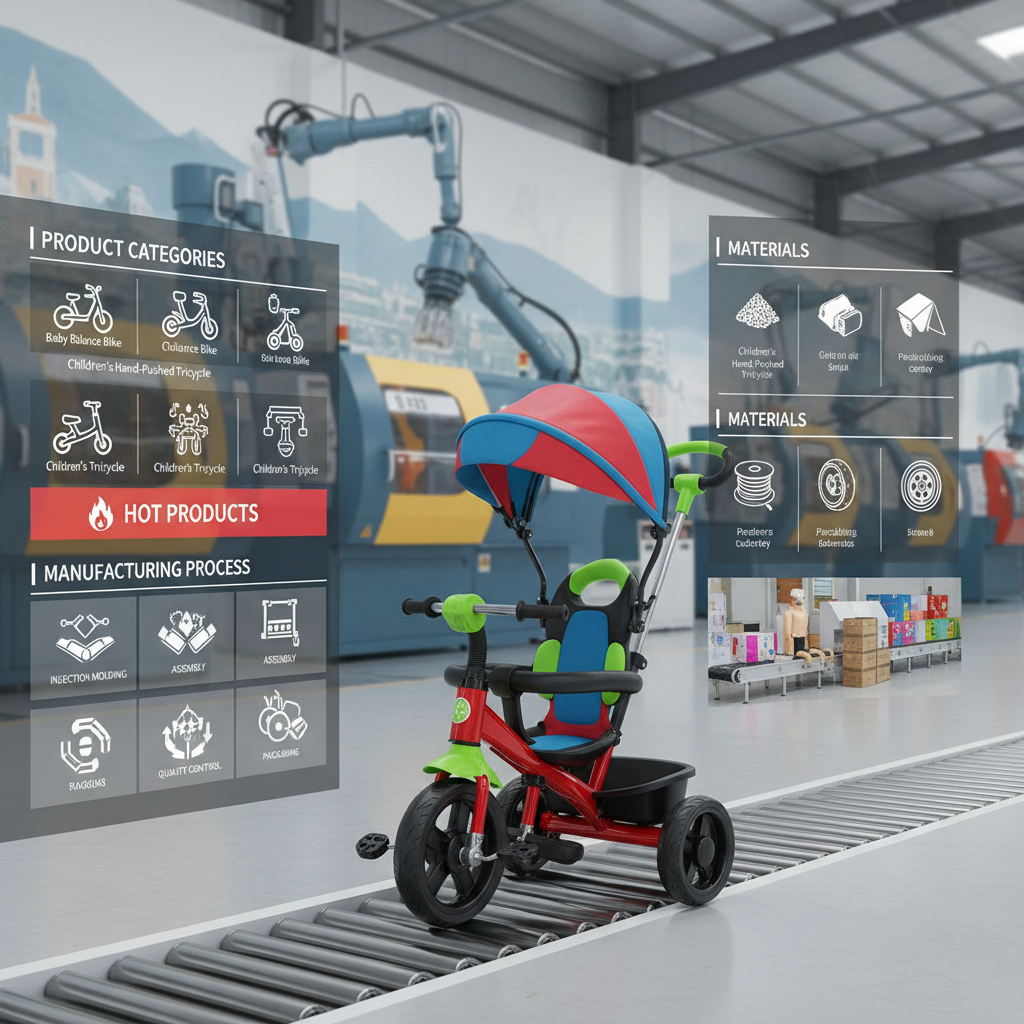
Understanding the intricacies of the manufacturing process—ranging from the selection of non-toxic polymers to the precision of the wheel bearings—allows businesses to offer superior value to their customers. Whether you are looking for Baby Balance Bikes or more complex Children's Hand-Pushed Tricycles, the role of the manufacturer is to balance cost-efficiency with uncompromising safety. This guide explores the technical and commercial landscape of sourcing from a premier push trike with canopy Manufacturer to help you optimize your product portfolio.
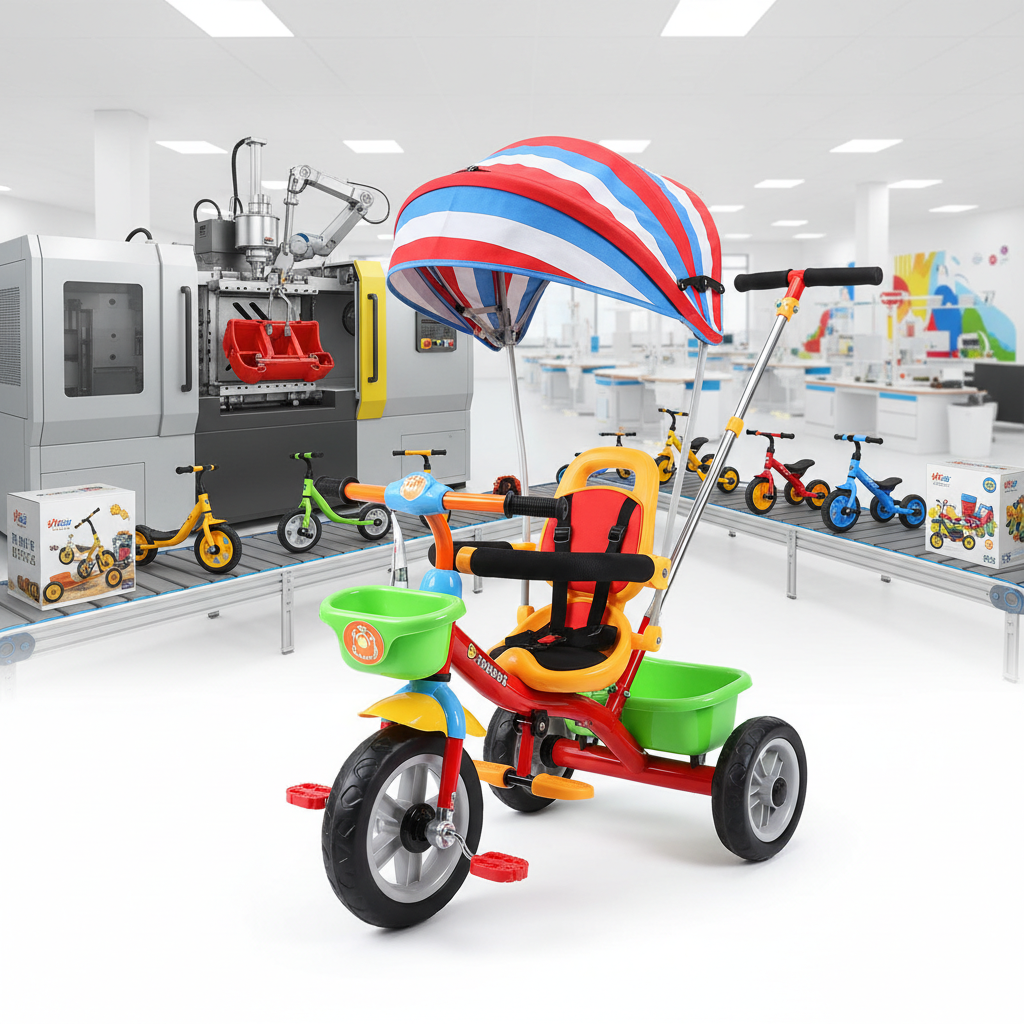
Industry Context of push trike with canopy Manufacturer
The toy manufacturing sector, particularly for early childhood mobility, has seen a paradigm shift toward "growth-adaptive" products. A leading push trike with canopy Manufacturer now operates at the intersection of the juvenile product industry and ergonomic science. With global standards like ISO and ASTM guiding the production lines, the focus has moved beyond simple aesthetics to rigorous stress-testing and material toxicity analysis, ensuring that products are safe for infants worldwide.
Currently, the challenge facing many brands is the volatility of raw material costs and the increasing demand for sustainable plastics. To combat this, an innovative push trike with canopy Manufacturer implements Lean Manufacturing principles to reduce waste while maintaining the structural integrity of the chassis. This industry context highlights a move toward "slow toys"—products that last years rather than months—by offering modular designs that evolve as the child grows.
Defining the Role of a push trike with canopy Manufacturer
In simple terms, a push trike with canopy Manufacturer is a specialized entity that designs, engineers, and produces three-wheeled vehicles designed for toddlers, featuring a parental push handle and a protective sun shield. Unlike general toy factories, these manufacturers focus on the specific biomechanics of early walkers, ensuring that the seat angle, pedal distance, and handlebar height are optimized for children aged 10 months to 3 years.
This role is deeply connected to modern humanitarian and developmental needs, as outdoor play is increasingly recognized as vital for cognitive development. By providing affordable, high-quality mobility solutions, a push trike with canopy Manufacturer enables parents in urban environments to encourage their children's physical activity while maintaining safety and protection from environmental hazards like UV radiation.
Beyond production, the manufacturer serves as a consultant for brands, helping them navigate the complex landscape of safety certifications (such as EN71 in Europe or CPSIA in the US). They transform a conceptual design into a mass-producible reality, ensuring that the transition from a "push-mode" (parental control) to a "pedal-mode" (child control) is intuitive and safe for the end-user.
Core Components of High-Quality Push Trikes
The structural integrity of a product from a professional push trike with canopy Manufacturer begins with the frame. Most high-end models utilize reinforced steel or high-density polyethylene (HDPE) to ensure the vehicle can withstand the weight of a growing child and the torque applied during the pushing phase without bending or snapping.
One of the most critical elements is the canopy system. A top-tier push trike with canopy Manufacturer uses UPF 50+ rated fabrics and flexible fiberglass ribs, allowing the canopy to be adjusted for different sun angles or folded away entirely. This component is not merely an accessory but a health necessity to protect sensitive infant skin from harmful solar radiation during outdoor excursions.
Lastly, the wheel and bearing assembly defines the "push experience." A reputable push trike with canopy Manufacturer employs EVA foam or rubberized tires to provide a shock-absorbing ride that is quiet on pavement and gentle on indoor floors. Combined with a secure 5-point safety harness and an adjustable footrest, these components create a secure environment that fosters a child's confidence.
Performance Metrics in Tricycle Manufacturing
Evaluating the quality of a push trike with canopy Manufacturer requires a look at specific performance KPIs. These metrics typically include load-bearing capacity, UV-resistance duration of the canopy fabric, and the smoothness of the steering mechanism. By quantifying these parameters, manufacturers can ensure a consistent user experience across thousands of units.
Moreover, the scalability of the design—how easily it transforms from a stroller-like trike to a standalone tricycle—is a key measure of engineering success. This versatility extends the product lifecycle, providing long-term value to the consumer and reducing the environmental impact of frequent toy replacements.
Manufacturing Quality Comparison for push trike with canopy Manufacturer
Global Applications and Market Use Cases
The application of these products varies significantly across global regions. In high-density urban areas like Tokyo or New York, a push trike with canopy Manufacturer focuses on compact, foldable designs that can fit into small elevators and apartments. In these markets, the "stroller-replacement" aspect of the push trike is highly valued by parents who want a lightweight alternative for short city trips.
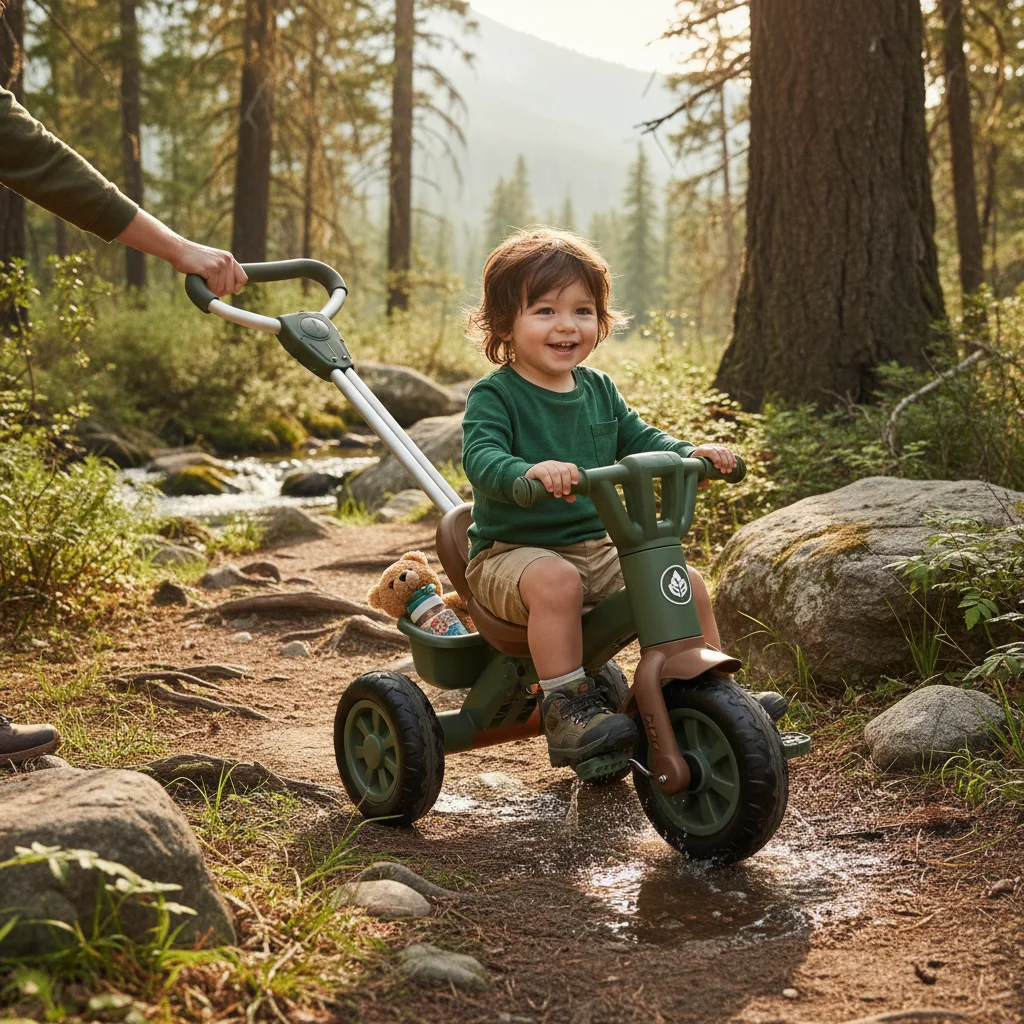
In contrast, in suburban markets across North America and Europe, there is a higher demand for "all-terrain" capabilities. Manufacturers adapt their designs with wider tires and more robust suspension systems to handle park paths and gravel. Regardless of the region, the core objective remains the same: providing a safe, engaging tool for early childhood mobility that evolves with the child's developmental milestones.
Long-Term Value and Safety Advantages
The long-term value of sourcing from a premium push trike with canopy Manufacturer lies in the reduction of after-sales liabilities. When a product is engineered with precision, the incidence of part failure—such as canopy collapse or wheel detachment—is minimized. This reliability builds immense trust between the brand and the consumer, leading to higher customer lifetime value and positive word-of-mouth referrals.
From a psychological perspective, the safety features provided by a professional manufacturer—like the non-slip pedals and secure safety bars—give parents the "peace of mind" that is the most valuable currency in the baby product industry. Knowing that the materials are BPA-free and lead-free ensures that the child's health is not compromised during play.
Furthermore, the sustainability aspect cannot be ignored. By creating a "3-in-1" or "4-in-1" product (from push trike to baby balance bike to independent trike), the manufacturer reduces the need for parents to buy three different products. This logical approach to consumption appeals to the modern, eco-conscious parent and positions the brand as a sustainable choice in the toy market.
Future Innovations in Ride-on Technology
The future of the push trike with canopy Manufacturer is moving toward "smart" integration and bio-based materials. We are seeing the emergence of recycled ocean plastics being used for frames, reducing the carbon footprint of production without sacrificing strength. Additionally, some forward-thinking manufacturers are exploring the integration of simple sensory feedback systems that reward children for pedaling, merging physical activity with digital gamification.
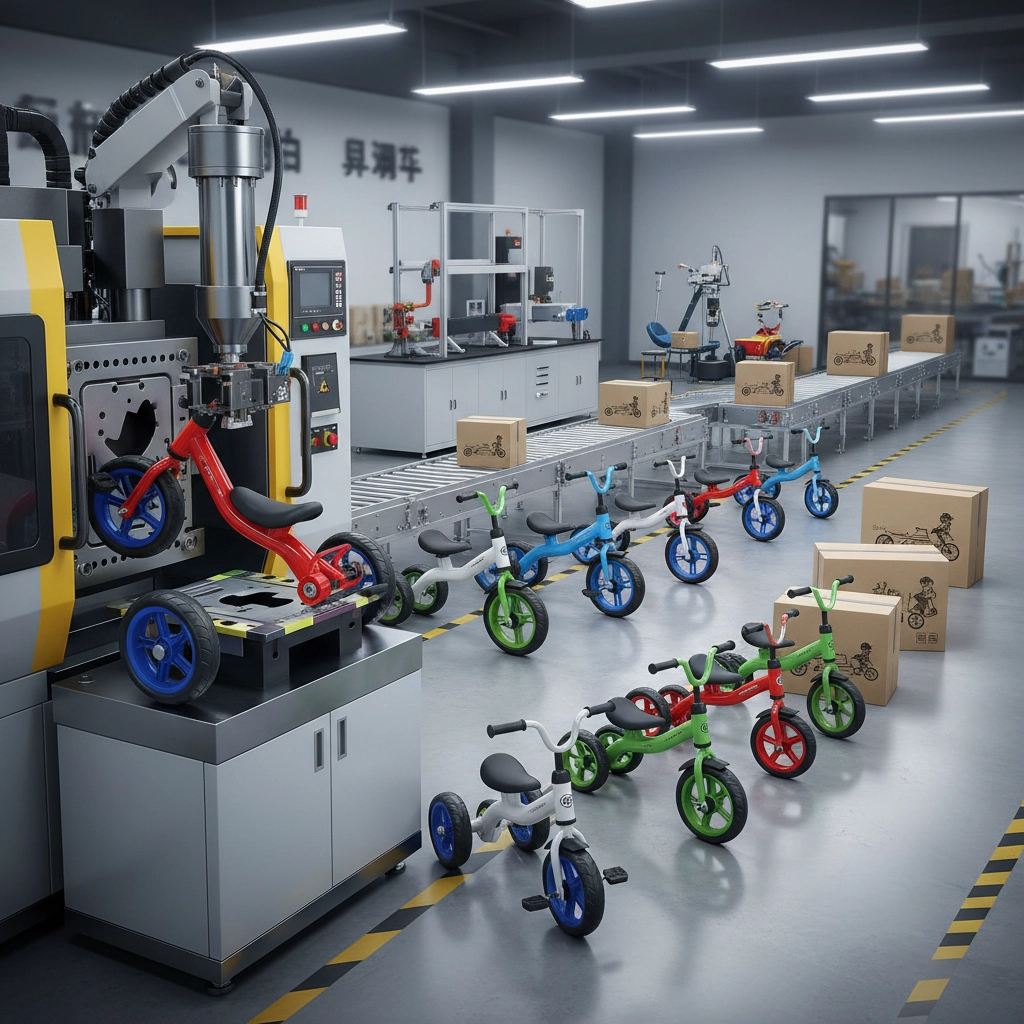
Automation in the assembly process is also enhancing precision. Robotic welding and AI-driven quality control systems now allow for tighter tolerances in the steering and axle assemblies, resulting in a smoother glide and longer product lifespan. This digital transformation ensures that every single unit leaving the factory is identical in quality to the prototype.
Finally, there is a trend toward modular customization. Future push trikes will likely offer interchangeable "skin" packages or accessory kits (like storage bags and upgraded canopies) that allow parents to personalize the ride-on. This shift toward personalization, backed by the engineering expertise of a push trike with canopy Manufacturer, will keep the category fresh and relevant for years to come.
Technical Comparison of Ride-on Manufacturing Standards
| Feature Dimension |
Standard Manufacturer |
Premium Manufacturer |
Impact on User |
| Frame Material |
Basic Plastic |
Reinforced HDPE/Steel |
Increased Stability |
| Canopy Grade |
Basic Polyester |
UPF 50+ Treated Fabric |
Superior Sun Protection |
| Wheel Type |
Hard Plastic |
EVA Foam / Rubber |
Quiet, Smooth Ride |
| Safety Harness |
Single Belt |
5-Point Adjustable |
Maximum Child Security |
| Growth Adaptability |
Fixed Design |
3-in-1 Modular |
Longer Product Life |
| Certifications |
Local Only |
ASTM, EN71, ISO |
Global Market Access |
FAQS
Look for a manufacturer that provides transparent safety certifications (ASTM, EN71), uses non-toxic, BPA-free materials, and offers modular designs. A reliable partner should also have a robust quality control process for the canopy's UV protection and the frame's load-bearing capacity to ensure child safety across various environments.
The canopy is more than just a shade; it's a health feature. A high-quality manufacturer uses UPF 50+ fabrics that block the majority of harmful UV rays. This adds significant commercial value as parents prioritize sun protection for infants, making the product more competitive against basic tricycles that lack this feature.
Yes, professional manufacturers typically offer OEM and ODM services. This includes customizing colors, adding brand logos, and adjusting specific features like wheel materials or canopy styles to align with your brand's target market and pricing strategy, provided the minimum order quantities (MOQ) are met.
Absolutely. EVA foam is preferred by top manufacturers because it provides a cushioned ride, is significantly quieter on hard surfaces, and offers better grip than hard plastic. This reduces vibration for the child and makes the "push" experience much easier for the parent.
A well-manufactured modular trike is designed to last from approximately 10 months up to 3 or 4 years. By transitioning from a pushed ride-on to a self-pedaled tricycle, the product remains useful throughout several critical developmental stages of early childhood.
Request a full set of laboratory test reports (e.g., SGS or Intertek) specifically for the batch of products you are ordering. Ensure the manufacturer can provide certification for chemical safety (lead/phthalates) and mechanical safety (no sharp edges, stable tipping points).
Conclusion
Partnering with a professional push trike with canopy Manufacturer is about more than just sourcing a product; it is about investing in safety, durability, and developmental value. By focusing on high-grade materials, UV-protective canopies, and adaptive designs, businesses can provide parents with a versatile tool that supports a child's growth while ensuring maximum security. The integration of ergonomic engineering and international safety standards remains the gold standard for success in the juvenile ride-on market.
Looking forward, the industry will continue to evolve toward sustainable materials and smarter, more personalized designs. For brands looking to lead the market, the key lies in choosing a manufacturer that doesn't just follow trends but anticipates the future of child development and environmental responsibility. We invite you to explore the possibilities of high-quality ride-ons and enhance your product line today. Visit our website: www.wqlkidsrideon.com