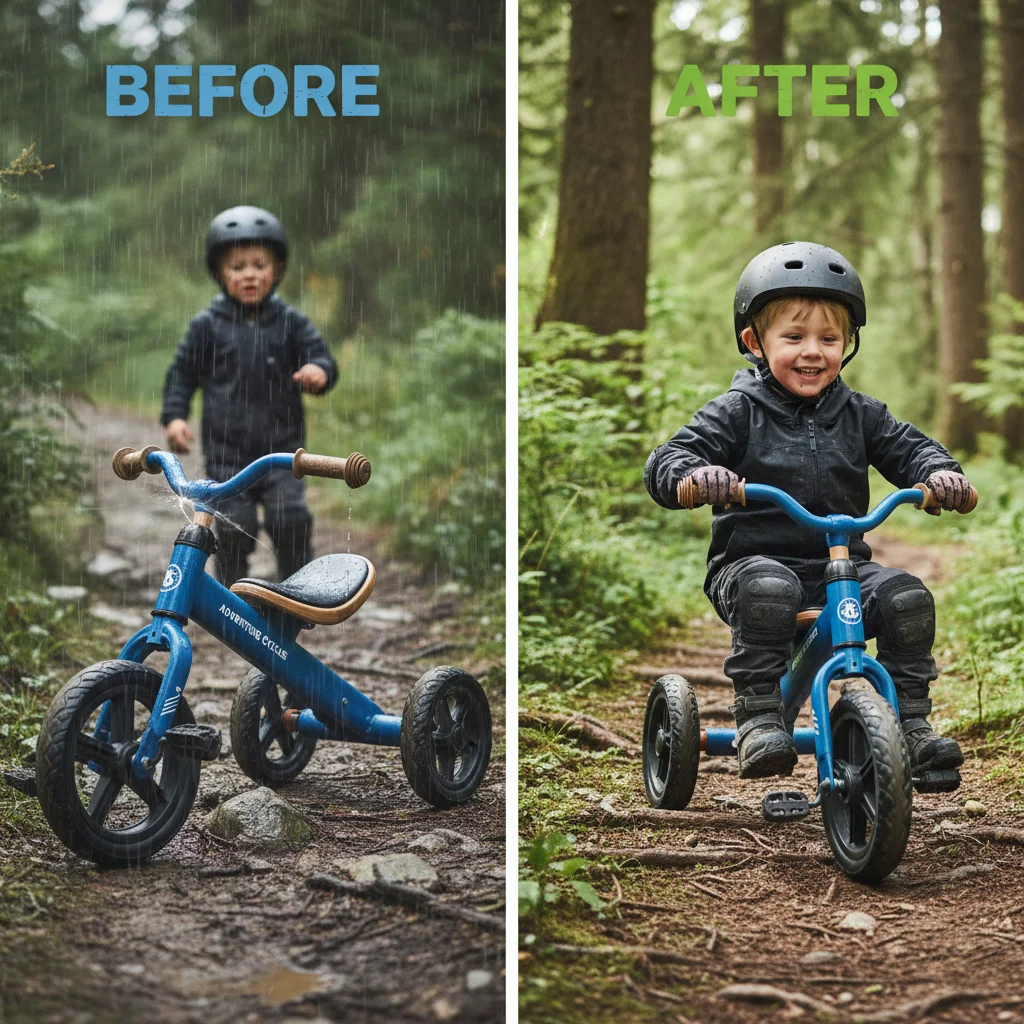
The global demand for versatile early childhood development toys has led to the rise of the professional convertible push trike Manufacturer, providing solutions that evolve alongside a child's motor skills. By blending the safety of a guided stroller with the independence of a tricycle, these manufacturers address the critical transition from infancy to toddlerhood, ensuring a seamless developmental curve.
In an era where parents prioritize longevity and sustainability, partnering with a reliable convertible push trike Manufacturer ensures that products are not only durable but also adaptable. This adaptability reduces waste by replacing the need for multiple single-stage ride-ons, aligning with global trends toward conscious consumption in the toy industry.
Understanding the engineering and safety standards behind a convertible push trike Manufacturer allows distributors and parents to make informed decisions. From ergonomic handle adjustments to non-toxic material selection, the role of the manufacturer is pivotal in balancing commercial appeal with the rigorous safety requirements of the children's ride-on market.
The Role of a Convertible Push Trike Manufacturer in Child Development
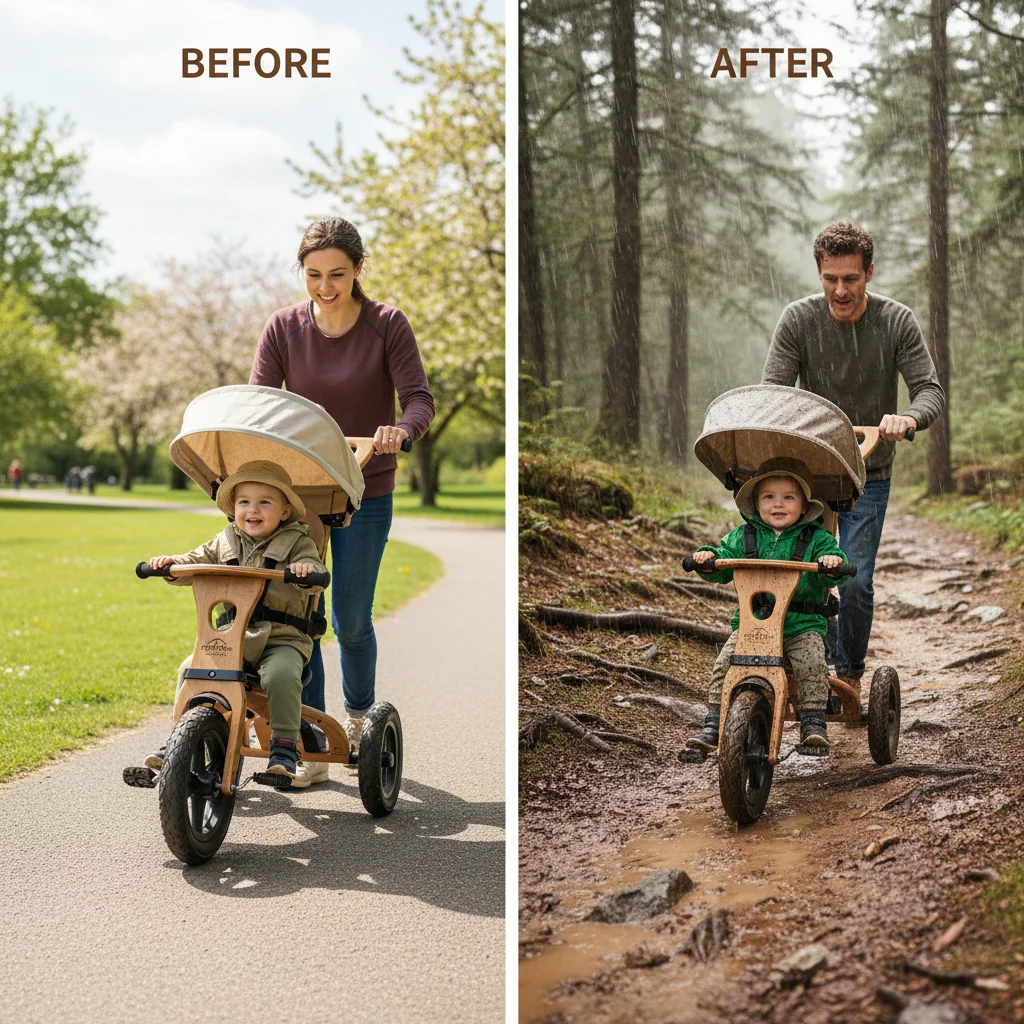
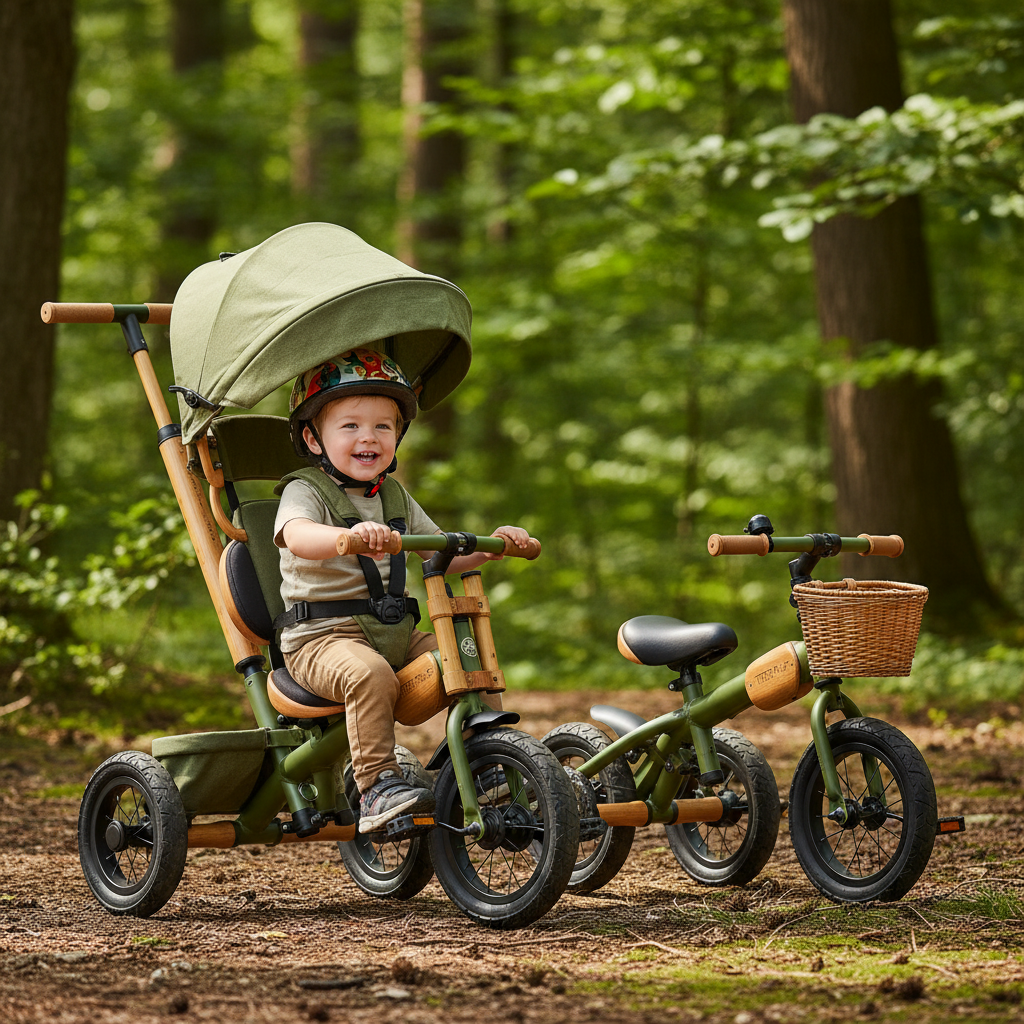
A professional convertible push trike Manufacturer does more than assemble parts; they design a developmental journey. By creating a product that transforms from a parent-controlled push-car into a child-led tricycle, the manufacturer facilitates the gradual acquisition of balance and coordination, which is essential for later transitions to baby balance bikes or children's simple tricycles.
This progression is carefully calibrated to match the physical milestones of children aged 10 months to 5 years. The engineering focus remains on providing a secure environment where toddlers feel safe to experiment with pedaling while the parent maintains a safety net, effectively bridging the gap between total dependence and autonomous mobility.
Core Engineering Standards for Convertible Ride-Ons
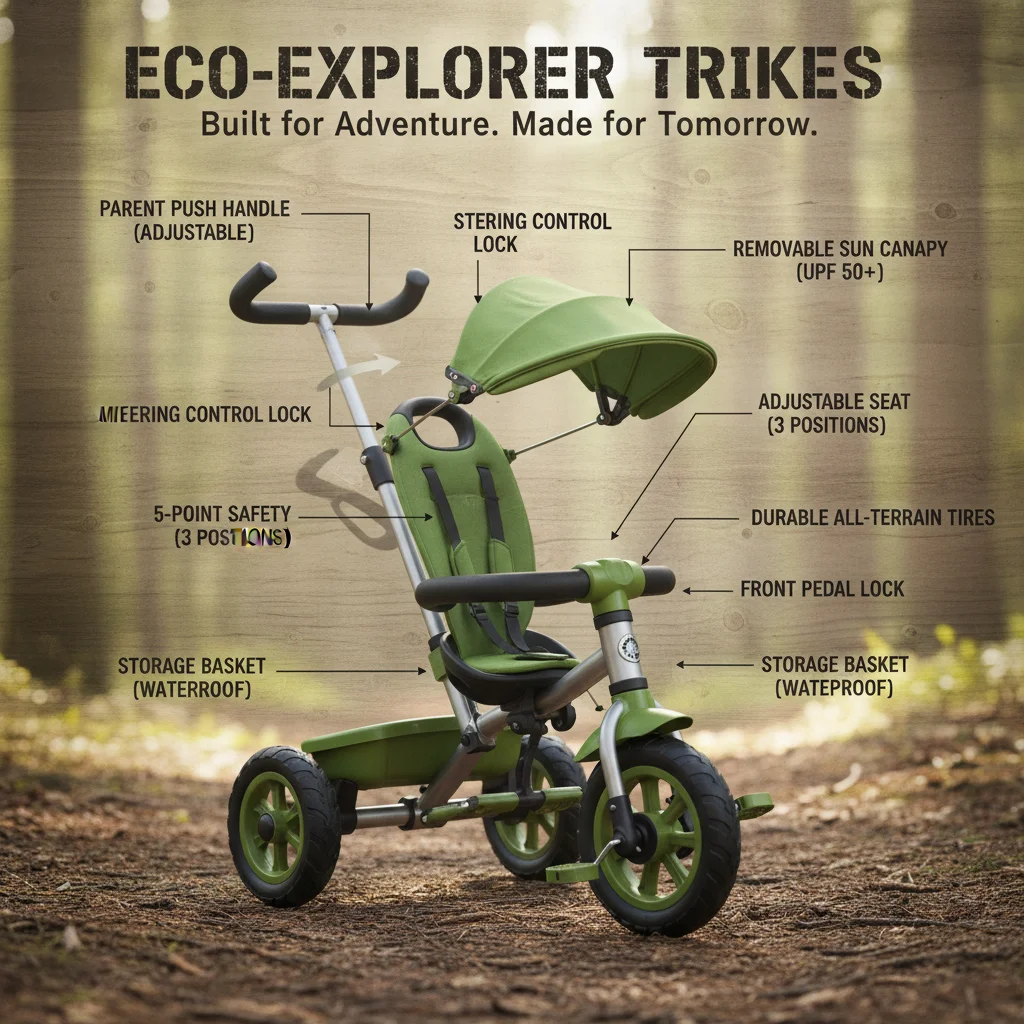
The technical complexity of being a convertible push trike Manufacturer lies in the modularity of the frame. The chassis must be rigid enough to support a growing child but flexible enough to allow for the removal of push handles, safety bars, and footrests without compromising the structural integrity of the vehicle.
Ergonomics play a vital role in the design process. Manufacturers must account for various parent heights through adjustable handlebars and varying child proportions through adjustable seating. This ensures that the "push" phase is comfortable for the adult and the "ride" phase is intuitive for the toddler.
Furthermore, the integration of high-quality bearings and durable wheel materials is non-negotiable. Whether it is EVA foam for indoor use or rubberized compounds for outdoor terrains, the goal of the manufacturer is to provide a smooth glide that reduces the physical effort required by the parent and increases the joy of movement for the child.
Material Innovation and Safety Compliance
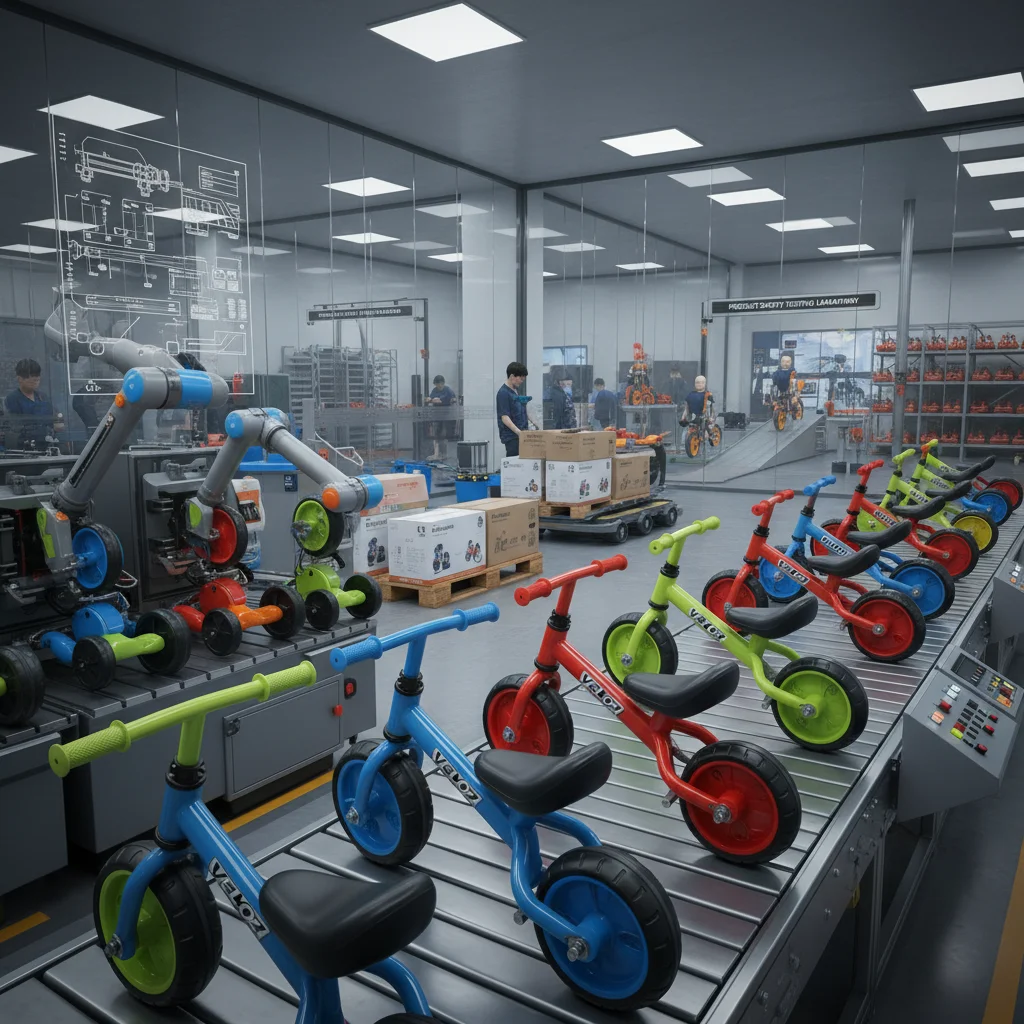
To maintain a reputation as a leading convertible push trike Manufacturer, adherence to international safety certifications like ASTM and EN71 is paramount. This involves rigorous stress testing of the joints and ensuring that no small parts can detach, which prevents choking hazards for infants.
The selection of polymers is where a convertible push trike Manufacturer truly differentiates itself. Using BPA-free, phthalate-free, and UV-resistant plastics ensures that the toy remains safe for oral exploration by toddlers and does not degrade under prolonged exposure to sunlight during outdoor excursions.
Beyond chemical safety, the structural geometry is designed to prevent tipping. By optimizing the center of gravity and widening the wheelbase, the manufacturer ensures that the trike remains stable even when the child is leaning during a turn, providing peace of mind for parents.
Market Scalability and Cost-Efficiency Analysis
From a commercial perspective, the value proposition of a convertible push trike Manufacturer is based on "lifecycle value." Instead of selling three separate products—a stroller, a push-trike, and a tricycle—the manufacturer offers one versatile unit that serves the customer for several years.
This model is highly attractive to modern consumers who are shifting toward minimalism. By optimizing production lines for modular components, manufacturers can reduce inventory costs while offering a high-margin product that appeals to the "buy it once, use it long" consumer psychology.
Comparative Performance of Convertible Push Trike Manufacturing Methods
Global Applications of Multi-Stage Trikes
The application of these products varies by region, but the core need for early mobility remains universal. In urban centers across Europe and North America, the convertible push trike Manufacturer focuses on compact, foldable designs that fit into small apartments and public transport, catering to the "city parent" lifestyle.
In emerging markets, the focus shifts toward extreme durability and all-terrain capabilities. Manufacturers adapt their designs with puncture-proof tires and reinforced frames to handle uneven road surfaces, ensuring that children in diverse environments have access to safe, developmental play equipment.
Long-Term Value and Sustainability Benefits
Sustainability is no longer an option but a requirement. A forward-thinking convertible push trike Manufacturer integrates recycled plastics and bio-based composites into their production. By extending the product's lifespan through its convertible nature, the manufacturer effectively reduces the volume of plastic waste ending up in landfills.
Beyond the environment, there is a profound emotional value. The trike becomes a milestone marker for the family—from the first time a baby sits in the guided seat to the first time they pedal independently. This creates a strong brand bond between the consumer and the manufacturer.
Logistically, the multi-stage design optimizes shipping and warehousing. A single SKU (Stock Keeping Unit) that replaces three separate products reduces the carbon footprint associated with transport and storage, benefiting both the manufacturer and the global environment.
Future Trends in the Convertible Ride-On Industry
The next frontier for the convertible push trike Manufacturer is the integration of "Smart Play" technology. We are seeing a shift toward the inclusion of sensors that track a child's pedaling cadence or provide haptic feedback to help them learn the rhythm of cycling, blending physical activity with digital education.
Additionally, the move toward "Circular Economy" models is accelerating. Some manufacturers are implementing buy-back programs where old trikes are returned, refurbished, and recycled, ensuring that the materials are reused in new production cycles without losing quality.
Customization is also on the rise. Through 3D printing and modular additive manufacturing, a convertible push trike Manufacturer can now offer personalized color schemes and ergonomic adjustments tailored to the specific physical needs of a child, moving away from one-size-fits-all production.
Analysis of Future Manufacturing Trends for Convertible Trikes
| Innovation Trend |
Implementation Level |
Impact on User |
Sustainability Score |
| Bio-Plastic Frames |
Moderate |
Non-toxic / Safe |
9/10 |
| Smart Pedaling Sensors |
Low |
Educational Tracking |
5/10 |
| Modular Tool-less Change |
High |
Extreme Convenience |
7/10 |
| Closed-loop Recycling |
Moderate |
Eco-conscious Ownership |
10/10 |
| Custom 3D Printing |
Low |
Personalized Ergonomics |
6/10 |
| Light-weight Carbon Alloys |
Moderate |
Easier Portability |
8/10 |
FAQS
They produce multi-stage ride-ons that transform as a child grows. Typically, these start as "push-cars" with parent controls (handles and safety bars) for infants, then convert into "assisted trikes" where the child starts pedaling, and finally into independent "tricycles" once the parent handle is removed. This ensures the product is useful from around 1 year to 5 years of age.
Look for certifications such as ASTM (American Society for Testing and Materials) or EN71 (European Standard for Toy Safety). A reputable convertible push trike Manufacturer will provide these certificates and specify that their materials are BPA-free and lead-free, ensuring the product is safe for children who may chew on the handlebars.
It depends on the child's age. A convertible trike is ideal for the transition from infancy (12+ months), providing stability and parent control. Balance bikes are typically introduced slightly later (18-24 months) to focus purely on balance. Many parents use the convertible trike as the first experience with wheels before moving to a balance bike.
Most high-end manufacturers design their products for "tool-less" or "minimal-tool" conversion. The goal is to allow parents to switch modes in minutes using click-locks or simple screws. Always check the manufacturer's manual or video guides to ensure the conversion process matches your technical comfort level.
For outdoor longevity, look for a manufacturer using puncture-proof EVA or rubber tires rather than thin plastic. UV-resistant powder-coated steel or high-density polyethylene (HDPE) for the frame ensures that the colors don't fade and the structure doesn't become brittle under the sun.
Yes, most professional manufacturers offer OEM (Original Equipment Manufacturer) services. This allows businesses to customize colors, branding, and even certain ergonomic features to suit their specific target market, provided the order meets the minimum order quantity (MOQ).
Conclusion
Choosing a professional convertible push trike Manufacturer is about more than just sourcing a product; it is about investing in a tool for childhood development. By integrating modular engineering, rigorous safety compliance, and sustainable material science, these manufacturers provide a solution that grows with the child, reduces environmental impact, and offers unmatched value for parents.
As the industry moves toward smarter, more eco-friendly designs, the synergy between safety and innovation will continue to drive the market. For those seeking a partner who understands the delicate balance of early childhood ergonomics and commercial scalability, the right manufacturing partnership is the key to success. Visit our website: www.wqlkidsrideon.com